
Concealed Information Test (CIT)
Advanced Investigative Methodology — Recognition-Based Forensic Assessment.
The Concealed Information Test is a recognition-based psychophysiological methodology that assesses whether an individual produces differential physiological responses to specific, non-public information relevant to an investigation. Unlike a conventional polygraph examination, CIT does not address deception—it measures orienting responses indicative of recognition of concealed investigative details.
A specialist methodology requiring specific investigative conditions, CIT is not appropriate for every case. The Centre for Forensic Neuroscience conducts a thorough suitability assessment before recommending this or any methodology.
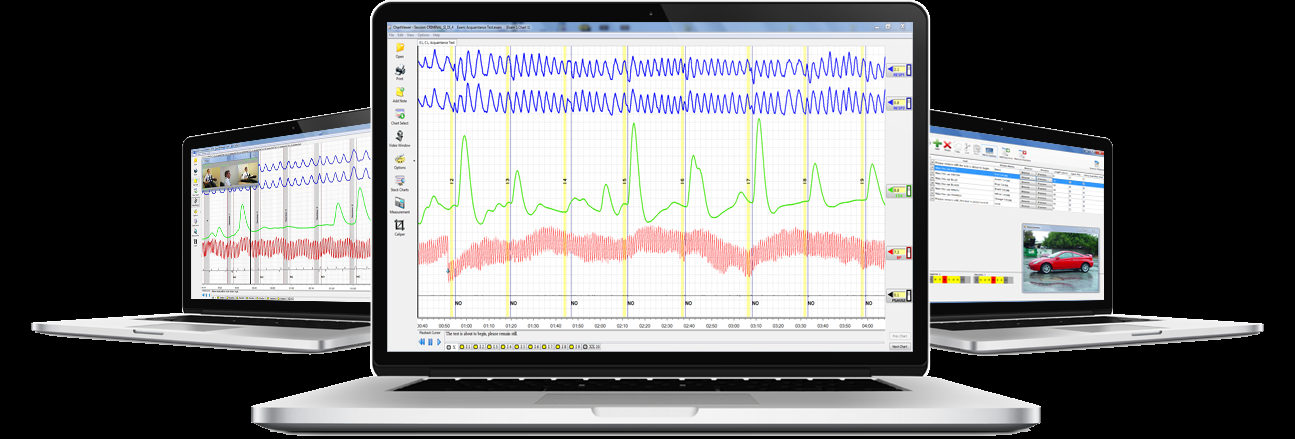
What Is the Concealed Information Test?
An alternative forensic psychophysiological methodology based on the detection of recognition-based orienting responses, not the assessment of deception.
The CIT—historically called the Guilty Knowledge Test (GKT)—presents multiple-choice items in which one option corresponds to a genuine concealed detail and the remaining options are plausible but incorrect alternatives. Psychophysiological responses are recorded to assess whether the individual produces differential orienting responses to the relevant item.
Unlike a conventional polygraph, CIT does not assess truthfulness or deception. It detects differential autonomic nervous system activity—including changes in electrodermal, respiratory and cardiovascular responding—elicited when an individual encounters personally significant, concealed information.
Key Distinctions
- Assesses recognition-based orienting responses, not deception
- Uses a multiple-choice stimulus format
- Requires confidential holdback information
- Addresses a different investigative question from CQT
- Extensively peer-reviewed and used operationally in several countries
Why CIT Is Different from a Conventional Polygraph
Two distinct methodologies addressing different investigative questions.
| Conventional Polygraph (CQT) | Concealed Information Test (CIT) | |
|---|---|---|
| Question addressed | Are the physiological response patterns more consistent with deception or truthfulness regarding a specific issue? | Does the individual recognise specific concealed information? |
| Question format | Direct accusatory questions compared against comparison questions | Multiple-choice items: one relevant detail among several plausible alternatives |
| What is measured | Physiological arousal patterns interpreted within a deception-testing framework | Recognition-based orienting responses to concealed information |
| Key requirement | Well-formulated relevant and comparison questions; suitable case circumstances | Confidential holdback information with plausible alternative items |
CIT and conventional polygraph are complementary methodologies, not competing ones. The Centre for Forensic Neuroscience assesses each case individually and recommends whichever approach—or combination of approaches—best fits the investigative question.
The Investigation Comes First
Why the quality of the investigation determines whether CIT is viable.
In CIT, the confidential investigative information is the test material. The quality, specificity, and confidentiality of that information are not merely desirable—they are essential. Early consultation is recommended where CIT is being considered.
"In the Concealed Information Test, the investigation does not simply provide background information—it provides the test material."
Holdback Information
CIT requires confidential details that an uninvolved person would not be expected to know.
Media Contamination
If concealed details have been publicly disclosed, the evidential basis for CIT may be compromised.
Disclosure Risk
Exposure through interviewing, evidence sharing, or case materials can undermine the methodology.
Early Consultation
The Centre for Forensic Neuroscience can advise on information handling from the earliest stages to preserve CIT viability.
Scientific Principles
How recognition memory and the orienting response underpin the methodology.
Recognition Memory
When an individual encounters previously experienced information, it may be processed differently from novel material. Recognition can be reflected in measurable physiological and behavioural responses, including changes in electrodermal, respiratory and cardiovascular activity, as well as attentional and ocular measures. The particular response channels examined depend upon the CIT methodology being used.
The Orienting Response
An involuntary psychophysiological reaction occurs when a person perceives a stimulus as personally significant. This orienting response involves measurable changes in electrodermal activity, cardiovascular responding and respiration patterns, reflecting differential autonomic processing of significant versus non-significant stimuli.
Multiple-Choice Stimulus Presentation
Each question set contains one genuine case detail (the "probe") alongside several plausible but incorrect alternatives. An individual who recognises the relevant detail may be expected to produce a differential response relative to plausible alternatives.
Continuing Research and Academic Development
The Concealed Information Test continues to be the subject of active international research. Across university departments, forensic science institutes and government laboratories worldwide, researchers continue to investigate the cognitive and physiological mechanisms that underpin recognition-based assessment. Areas of ongoing study include the role of recognition memory in forensic contexts, the nature of physiological responding to personally significant stimuli, and the practical requirements for operational application of CIT within investigative settings.
Laboratory-based findings continue to inform improvements in investigative practice, and the relationship between controlled experimental conditions and real-world operational use remains an important area of study. As with any forensic methodology, the evidence base develops over time, and no single study should be regarded as providing definitive conclusions about the scope or limitations of CIT.
Doctoral research conducted at the University of Huddersfield examined a number of themes relevant to CIT, including the validity of the methodology under different experimental conditions, the visual presentation of stimulus materials, the use of mock-crime paradigms to simulate forensic scenarios, and the assessment of criminal intention. The research also considered a range of physiological measures—including electrodermal activity, respiration and heart rate—and explored both the strengths and inherent limitations of laboratory-based approaches to the study of CIT.
This work represents part of a broader international effort to refine understanding of how recognition-based methodologies perform under varying conditions, and how experimental findings may translate into applied investigative practice.
Recent research has also explored whether concealed recognition can be identified through behavioural measures beyond conventional autonomic physiology. A 2026 study published in Scientific Reports directly compared a polygraph-based CIT with an eye-tracking CIT in the same participants. The eye-tracking method achieved a numerically higher classification accuracy, although the difference between the approaches was not statistically significant. The study illustrates the continuing development of CIT as a recognition-based paradigm capable of being investigated through different physiological and behavioural measurement channels, while also highlighting the need for larger samples, field validation and further research into countermeasures.
The Centre for Forensic Neuroscience recognises the importance of ongoing scientific evaluation and seeks to ensure that specialist investigative methodologies are applied in a manner consistent with current research, professional standards and the circumstances of each individual case.
When Might CIT Be Appropriate?
Suitability depends on the specific circumstances of the investigation. The following are examples of contexts in which CIT has been or may be considered—they are not exhaustive, and each case requires individual assessment.
Serious Criminal Investigations
- Homicide investigations with holdback evidence
- Missing persons and body recovery
- Concealed weapons or property
- Route reconstruction and location identification
Security and Intelligence
- Organised crime investigations
- Corruption and misconduct enquiries
- Intelligence and counter-intelligence matters
Corporate and Financial
- Corporate investigations with confidential evidence
- Insurance fraud where specific details are known
- Financial investigations with holdback material
Illustrative examples only—the Centre for Forensic Neuroscience conducts a thorough assessment before recommending any methodology.
Specialist Training in CIT Methodology
Dr Keith Ashcroft has received training in CIT methodology through Japan's National Research Institute of Police Science (NRIPS), where CIT has been the standard forensic psychophysiological methodology for decades. This training forms part of the Centre for Forensic Neuroscience's wider investigative capability, enabling assessment and application of CIT where conditions are met.
Dr Keith Ashcroft has also served as External Examiner for doctoral research examining the validity of the Concealed Information Test at the University of Huddersfield. This role involved the independent academic assessment of doctoral research investigating the scientific principles, applications and limitations of CIT within forensic settings, reflecting ongoing engagement with developments in credibility assessment research.
These statements describe training received and an academic examining role held. They do not imply endorsement, affiliation or authorship on the part of NRIPS, the National Police Agency of Japan, or the University of Huddersfield.
CIT Within Our Investigative Services
CIT is one of several methodologies available through the Centre for Forensic Neuroscience. The investigative question determines the methodology—not the other way around.
Conventional Polygraph Examination
Comparison Question Test (CQT) methodology for assessing whether physiological response patterns are more consistent with deception or truthfulness regarding specific relevant questions.
Concealed Information Test
Recognition-based methodology for assessing whether an individual recognises specific concealed information. (Current page)
Statement Validity Assessment and Statement Analysis
Systematic evaluation of written or verbal accounts using criteria-based and scientific content analysis approaches.
Investigative Interviewing
Structured interview methodologies informed by cognitive and forensic psychology principles.
Cognitive Mapping
Visual mapping of cognitive and behavioural processes to support investigative analysis and understanding.
Question Formulation Consultation
Specialist consultation on the development and formulation of questions for forensic psychophysiological assessment.
Unsure which service is relevant? Contact the Centre for Forensic Neuroscience to discuss your requirements in confidence.
Limitations and Considerations
CIT is a specialist methodology with specific requirements. It is not appropriate for every investigation.
CIT may not be appropriate when:
-
Information has become public. Media coverage, court proceedings, or other disclosure may compromise the methodology.
-
Details may be known by innocent individuals. Legitimate access or circumstantial exposure limits the interpretive value of recognition.
-
Suitable concealed information is unavailable. CIT requires multiple sets of specific, verifiable details with plausible alternatives.
-
Information reliability is in question. Unverified holdback details may affect the validity of the test.
-
Plausible alternatives cannot be developed. Each concealed detail must be embedded among equally plausible items for an uninformed person.
-
Another methodology may be more appropriate. The Centre for Forensic Neuroscience will recommend the best-suited approach for the investigative question.
A detailed case assessment is always conducted before any methodology is recommended.
Frequently Asked Questions
Clarifications on the Concealed Information Test methodology.
Is CIT the same as a lie detector test? expand_more
No. CIT is fundamentally different from a conventional polygraph examination. A polygraph (CQT) uses comparison questions to assess whether physiological response patterns are more consistent with deception or truthfulness. CIT assesses whether an individual produces differential psychophysiological responses to specific, non-public information presented in a multiple-choice format.
Can CIT determine whether someone is lying? expand_more
No. CIT assesses recognition, not deception. It measures whether an individual produces differential psychophysiological orienting responses to information that should only be personally significant to someone with direct knowledge of it.
Can CIT prove someone committed an offence? expand_more
No. CIT cannot prove guilt, innocence, or involvement. It provides investigative information about whether an individual appears to recognise specific case details. Recognition does not establish culpability.
What information is required before CIT can be considered? expand_more
Specific, verifiable case details that have not been made public and are unlikely to be known by an uninvolved person. These must be suitable for multiple-choice presentation alongside plausible alternatives. A detailed case assessment is always conducted first.
Is CIT suitable for every investigation? expand_more
No. CIT has specific requirements that many investigations will not meet. It depends on confidential holdback information, the quality of that information, and whether plausible alternatives can be developed. The Centre for Forensic Neuroscience conducts a thorough suitability assessment before recommending any approach.
Can CIT be used together with a conventional polygraph examination? expand_more
In some circumstances, yes. CIT and conventional polygraph may complement each other as they address different investigative questions. The Centre for Forensic Neuroscience considers each case individually and advises on whether a combined approach is suitable.
Why must the investigative information remain confidential? expand_more
Confidentiality is essential to the integrity of CIT. The methodology detects differential physiological responding to information that should only be personally significant to someone with direct knowledge of events. If that information has been disclosed, an individual may produce orienting responses regardless of involvement, compromising the evidential basis of the assessment.
Can private clients request CIT? expand_more
CIT may be available to private clients, corporate organisations, and legal representatives, subject to suitability assessment. The same evidential and methodological requirements apply regardless of the instructing party.
Is CIT used internationally? expand_more
Yes. CIT is the subject of extensive international research and is used operationally in several countries, most notably Japan. NRIPS has conducted CIT research for decades, and CIT is employed as the standard forensic psychophysiological methodology nationwide in Japan. It is important to distinguish between the extensive international research literature and operational implementation, which remains more limited in scope.
How do I know whether my investigation is suitable? expand_more
Suitability depends on the nature of the investigation, available confidential information, and whether necessary conditions can be met. The Centre for Forensic Neuroscience offers confidential preliminary consultations—contact us to discuss your case.
Further Reading
Selected references for those wishing to learn more about CIT and its scientific basis.
FBI Law Enforcement Bulletin
Discusses CIT as an alternative methodology to the CQT, including its scientific basis and operational application.
National Research Institute of Police Science (NRIPS)
Japan's forensic research institute, conducting CIT research and operational application for decades within its Fourth Department of Forensic Science.
Peer-Reviewed Research
Meijer, E.H., klein Selle, N., Elber, L., & Ben-Shakhar, G. (2014)
Memory detection with the Concealed Information Test: A meta analytic review of fMRI, ERP, and skin conductance studies.
Psychophysiology, 51(9), 879–904. Widely regarded as one of the principal modern meta-analytic reviews of CIT, synthesising findings across multiple physiological and neuroimaging measures.
Academic Research
Fumagalli, A. (2020)
An Examination of the Validity of the Concealed Information Test.
Doctoral Thesis. University of Huddersfield.
Conference Presentations
Ashcroft, K.R., Rill, H.-G., Gamer, M., Godert, H.W., Vossel, G., & Busuttil, A. (2002)
Forensic Psychophysiology: Detecting espionage with the Guilty Knowledge Test.
Poster presented at the British Psychophysiology Society, 30th Annual Scientific Meeting, 23-25 September 2002, University of Glasgow, Scotland.
Ashcroft, K.R., Gamer, M., Rill, H.-G., Godert, H.W., Vossel, G., & Busuttil, A. (2002)
A comparison of various psychophysiological parameters for detecting concealed information.
Poster presented at the Society for Psychophysiological Research, 42nd Annual Meeting, 2-6 October 2002, Washington, D.C., USA.
Recent Peer-Reviewed Research
Celniak, W., Słapczyńska, D., Jarszak, B., & Augustyniak, P. (2026)
Evaluating eye-tracking as a method for deception detection against the polygraph as deployed in practice.
Scientific Reports, 16, 25352. DOI: 10.1038/s41598-026-55344-9
A direct within-participant comparison of conventional polygraph-based CIT and an eye-tracking CIT using machine-learning classification, illustrating the potential for concealed recognition to be assessed through different physiological and behavioural measurement modalities.
Research-Informed Practice
The Centre's approach to specialist investigative methodologies is informed by peer-reviewed research, professional training and continued academic engagement. Scientific evidence evolves over time, and investigative methodologies should be applied within the context of current research, professional standards and careful case assessment.
Discuss Whether CIT Is Appropriate
Not every investigation is suitable for CIT. The Centre for Forensic Neuroscience evaluates each case individually and will advise on the most appropriate methodology. Contact us in confidence for a preliminary consultation.