
Television has given the public a very dramatic picture of lie detector testing: wires attached, a tense question, a needle jumping, and someone being exposed. Real forensic polygraph practice is calmer, more structured and much more careful than that.
A polygraph does not detect lies. There is no single bodily signal that means a person is lying, and no responsible examiner should claim otherwise. A modern polygraph instrument records physiological activity while a trained examiner conducts a structured examination. The examiner then evaluates patterns in those recordings in the context of the questions, the interview, the case material and the suitability of the person being examined.
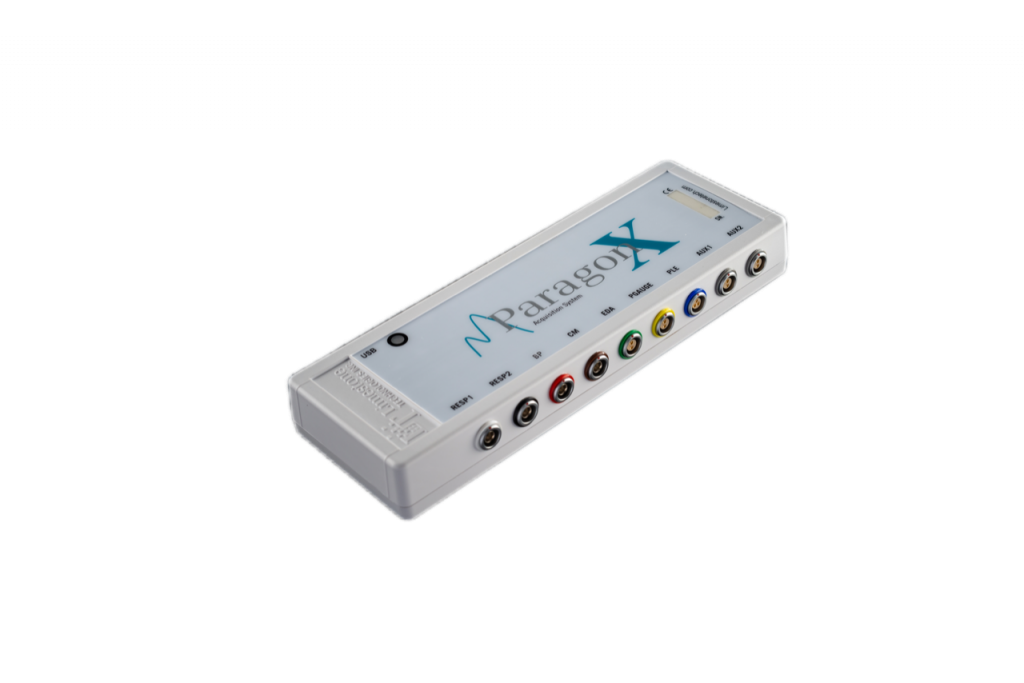
Although many people refer to it as a “lie detector machine”, a modern polygraph is actually a sophisticated physiological monitoring instrument. It does not automatically determine whether someone is lying. Instead, it records carefully measured physiological responses while a trained forensic examiner conducts a structured examination.
Table of Contents
What is a Polygraph?
The word polygraph comes from words meaning “many writings” or “many recordings”. That is a useful starting point. A polygraph instrument records several physiological channels at the same time, rather than looking for one simple sign of deception.
In a professional polygraph examination, the instrument is only one part of the process. The examiner reviews the case, assesses suitability, conducts a pre-test interview, develops precise questions, collects physiological recordings and then interprets the data using an established method. The instrument records. The examiner examines.
This distinction matters because the public phrase “lie detector” can create the wrong expectation. The equipment does not know whether an answer is true or false. It records changes in breathing, cardiovascular activity and electrodermal activity while questions are asked in a controlled sequence. The examiner evaluates whether the pattern of responses is more consistent with one interpretation than another.
Plain-English answer: how does a lie detector work? It records physiological responses during carefully structured questioning. The science is not in a single sensor; it is in the combination of question design, controlled presentation, physiological recording and professional interpretation.
What Does the Instrument Measure?
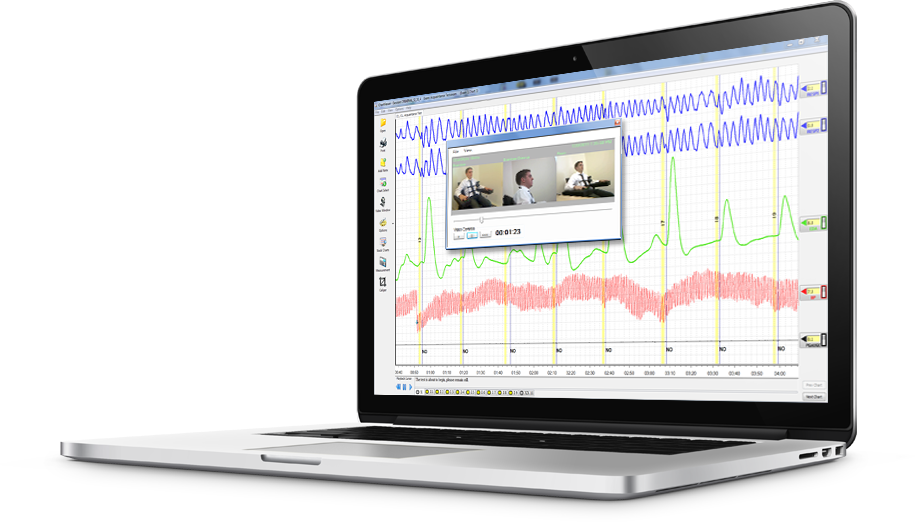
A modern polygraph instrument records several channels because human physiology is complex. No one channel is treated as a magic answer. The value lies in the pattern of response across channels and across repeated question presentations.
Respiration
Respiration components are usually placed around the chest and abdomen. They record changes in breathing pattern, such as depth, rhythm and pauses. The examiner is not looking for ordinary nervous breathing alone, but for meaningful response patterns during the question sequence.
Cardiovascular Activity
A blood pressure cuff or similar component records cardiovascular activity, including relative changes associated with pulse and blood pressure. These responses can reflect shifts in attention, arousal and autonomic activation during significant questions.
Electrodermal Activity
Small sensors attached to the fingers record changes in skin conductance. This channel is linked to sweat gland activity controlled by the sympathetic nervous system. It is often sensitive to attention and significance.
These channels are recorded simultaneously. The examiner then considers response magnitude, timing, quality of recording, consistency across charts and whether the response occurs to the relevant questions or to other question types.
Why Does the Body Respond?
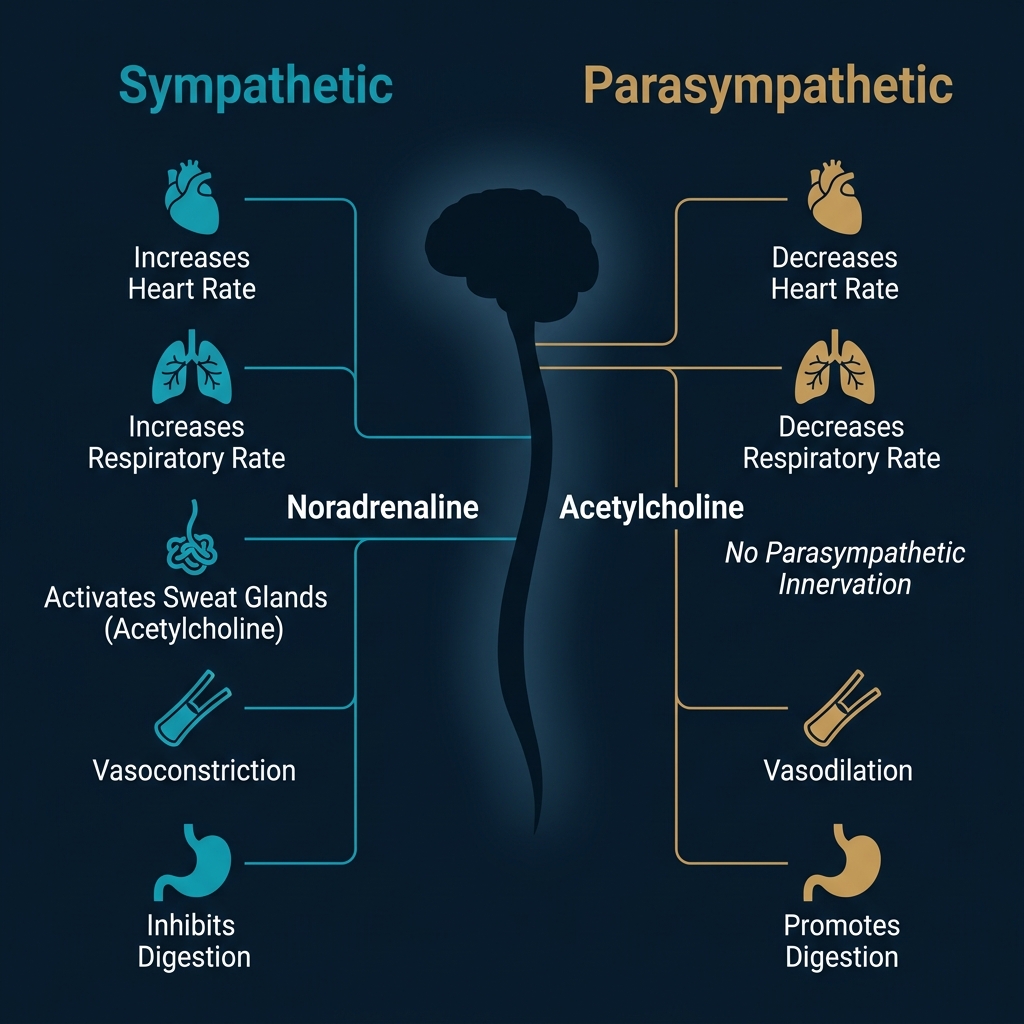
To understand how a polygraph works, it helps to understand the autonomic nervous system. This is the part of the nervous system that regulates many bodily functions without conscious effort. It influences breathing, heart activity, blood vessel tone and sweat gland activity.
When a person hears a question that is important, threatening, personally meaningful or linked to autobiographical memory, the body may show an orienting response. In plain English, the brain has noticed something significant and the body prepares to respond. That does not automatically mean deception. It means the question has captured attention and has physiological significance.
Several psychological processes may be involved. A question can be salient because it relates to a serious allegation. It can draw on autobiographical memory because it concerns a past event. It can require cognitive processing because the person must understand the wording, retrieve the relevant memory and decide on the answer. Where deception is involved, additional processes may include suppressing a truthful response, maintaining an alternative account and monitoring the consequences of being believed or not believed.
Modern lie detector science is therefore not based on the idea that lying produces one unique bodily signal. It is based on the more modest proposition that carefully designed questions, asked in a controlled procedure, can produce interpretable patterns of physiological response in suitable cases.
The Examination Starts Before the Sensors
A good polygraph examination begins before any sensor is attached. The first task is to understand whether the matter is suitable for testing at all. Suitability is not a formality. It protects the examinee, the instructing party and the integrity of the result.
The examiner will usually review the case background, identify the question to be answered, consider whether there are medical or psychological factors that may affect suitability, and decide whether the issue can be reduced to clear behavioural questions. Some cases are appropriate for a forensic polygraph examination. Others require clarification, legal advice, safeguarding input, therapeutic support or a different investigative route.
The pre-test interview is central. During this phase, the examiner explains the procedure, obtains informed consent, reviews the relevant issue and makes sure every question is understood in exactly the same way by both examiner and examinee. Definitions are agreed. Ambiguous words are removed. Assumptions are checked. The examinee should not encounter a relevant test question for the first time during recording.
This is why the Forensic Centre uses professional pre-screening before confirming an examination. Pre-screening helps identify suitability issues early and prevents poorly focused or unsafe examinations from going ahead.
Why Question Design Matters
Poor questions produce poor examinations. This is one of the simplest and most important principles in professional polygraph practice. The quality of the physiological recording cannot rescue a vague, compound or unfair question.
A good relevant question is behaviourally specific. It asks about something the person did or did not do, not about personality, morality, feelings or vague intentions. It should avoid compound wording, such as asking about two behaviours in one sentence. It should avoid hidden assumptions, such as presuming a disputed fact. It should take memory into account, especially when events are historic, repeated, emotionally charged or affected by alcohol, drugs, trauma or fatigue.
For example, “Have you ever betrayed me?” is not a good polygraph question. It is broad, emotional and undefined. A better question would identify a specific behaviour, a defined period and a shared meaning of the words used. That does not make the examination perfect, but it creates the conditions in which physiological recordings can be interpreted more responsibly.
The Centre has published a dedicated guide to polygraph question formulation, because question design is not a technical afterthought. It is part of the science of the examination.
Key principle: the most sophisticated polygraph equipment cannot turn an ambiguous question into a valid examination. Scientifically formulated questions are central to the quality of the result.
Does It Measure Nervousness?
This is perhaps the biggest myth. People often ask whether a nervous person will automatically fail. The answer is no. Almost everyone is nervous during a professional examination. Nervousness is expected, and it is one reason the procedure is structured carefully.
A polygraph examination does not simply measure how anxious someone is. Validated techniques compare responses across different question types within the same person. The examiner is interested in whether certain questions consistently produce stronger physiological responses than other questions in the same examination.
General anxiety and question-specific physiological responding are not the same thing. A person may be anxious throughout the appointment but show no meaningful differential response to the relevant questions. Another person may appear calm but show marked responses to specific items. This is why professional interpretation focuses on patterns, not on outward demeanour or a single nervous reaction.
Does the Computer Decide?
No. The polygraph instrument records physiology. Computer software may display the channels, assist with measurement, support numerical scoring and provide algorithmic information. That can be useful, but it does not replace professional judgement.
The examiner remains responsible for the examination. They must consider whether the data quality is adequate, whether the questions were properly formulated, whether the examinee was suitable, whether artefacts affected the recordings and whether the result should be reported with limitations. Computer-assisted analysis is a tool. It is not a substitute for training, ethics or expertise.
This is also why a responsible report should not present a polygraph result as stand-alone proof. Results should be interpreted alongside the broader case context, including statements, documents, digital evidence, disclosures and any relevant professional information. For a broader discussion of limitations, see the Centre’s article Do Lie Detectors Really Work?
What Happens During the Examination?
People often search for “how do lie detector tests work” because they want to know what actually happens on the day. The process is structured, and the recording phase is only one part of it.
During data collection, the examinee normally sits still, listens to the questions and answers with short, consistent responses such as yes or no. The questions have already been reviewed. The aim is not surprise. The aim is a controlled procedure in which the physiological data can be interpreted as fairly as possible.
Common Myths
The public conversation about polygraph examinations is crowded with myths. Some make the technique sound more powerful than it is. Others dismiss it too simply. Both errors are unhelpful.
Can it read my mind?
No. A polygraph instrument cannot read thoughts, memories or intentions. It records physiological activity while a trained examiner asks structured questions.
Does it detect lies?
No. The phrase lie detector is common but imprecise. The instrument records physiological activity; the examiner interprets response patterns within a structured examination.
Can psychopaths beat it?
Psychopathy does not make someone automatically immune to physiological responding. Examiner competence, method, question design, countermeasure awareness and case suitability all matter.
Can nervous people fail?
General nervousness is expected. Professional methods compare responses across question types within the same person; anxiety alone is not the same as significant question-specific responding.
Can medications affect testing?
Medication can affect physiology, alertness or suitability. It does not automatically prevent an examination, but it must be discussed during suitability screening.
Can anyone take a polygraph?
No. Suitability depends on informed consent, health, medication, language, memory, safeguarding, coercion risk and whether the issue can be tested using clear behavioural questions.
Scientific Perspective
Modern forensic polygraph examinations integrate several disciplines. They are not simply electronics, and they are not simply interviewing. The examination brings together psychology, psychophysiology, structured interviewing, validated testing procedures, physiological recording and professional interpretation.
Psychology
Questions must be understood, personally meaningful and behaviourally specific.
Psychophysiology
The autonomic nervous system can produce measurable changes during salient questions.
Professional Interpretation
The examiner evaluates patterns, data quality, suitability and limitations.
The scientific literature is cautious, and it should be. Major reviews have warned against exaggerated claims, especially when broad screening is treated as if it were the same as a focused specific-issue examination. The National Research Council reported that specific-incident polygraph tests can perform above chance in studied populations, while also emphasising that accuracy is below perfection and that broad screening raises serious limitations.
So how accurate is a lie detector? The honest answer is that accuracy is not a property of the instrument alone. It varies according to the testing format, the clarity of the issue, the examinee's suitability, the examiner's training, the quality of the questions, the recording conditions and the standard used to interpret the data. A carefully conducted specific-issue examination is very different from a broad screening exercise where the questions are generic and the base rate of the behaviour being investigated may be low.
This is why professional reports should avoid theatrical language and simple pass-fail certainty. A responsible examiner explains what was asked, what was recorded, how the recordings were evaluated and what limitations apply. In many cases, the most useful contribution of a polygraph examination is not a dramatic verdict, but a structured piece of information that helps clarify the next investigative, therapeutic or professional decision.
That balanced position is important. A professional polygraph examination is far more sophisticated than the public perception created by television, but it is not infallible. Accuracy depends on case suitability, examiner competence, question design, validated procedure, data quality, scoring method and how the result is interpreted in the wider evidential context. Anyone asking “how accurate is a lie detector?” should be wary of a single headline percentage with no explanation of method or context.
For members of the public, the safest summary is this: a polygraph is a structured forensic procedure that may provide useful information in suitable cases, but it should never be treated as automatic proof of truth, deception, guilt or innocence.
Conclusion
A thermometer measures temperature. An ECG records electrical activity. Neither diagnoses a condition on its own. A trained professional must interpret the recording in context.
Likewise, a polygraph instrument records physiological responses which are interpreted by a trained examiner within a structured forensic examination. The value of the examination depends not only on the equipment, but on suitability assessment, pre-test interviewing, careful question formulation, validated procedure, skilled data interpretation and cautious reporting.
If you are considering a polygraph examination, the best first step is not to book immediately. It is to establish whether the issue is suitable, whether the questions can be formulated properly and whether a professional examination is the right investigative route. The Professional Pre-Screening Questionnaire exists for that purpose. You can also return to the blog index for further educational guidance.
References and Further Reading
- National Research Council. (2003). The Polygraph and Lie Detection. Washington, DC: The National Academies Press. Read the executive summary.
- American Psychological Association. The Truth About Lie Detectors (aka Polygraph Tests). APA overview.
- American Polygraph Association. (2011). Meta-analytic survey of criterion accuracy of validated polygraph techniques. Polygraph, 40(4), 194-305.
- Ben-Shakhar, G. and Elaad, E. (2003). The validity of psychophysiological detection of information with the Guilty Knowledge Test: A meta-analytic review. Journal of Applied Psychology, 88(1), 131-151.
- Vrij, A. (2008). Detecting Lies and Deceit: Pitfalls and Opportunities. Chichester: Wiley.
This article is provided for general information and educational purposes. It is not legal advice, clinical advice or a substitute for professional consultation. Suitability for any polygraph examination must be assessed individually.