
Centre for Forensic Neuroscience
Home About Us Polygraph Examinations Cyber Psychology Investigative Psychology Statement Analysis Blog Contact Us
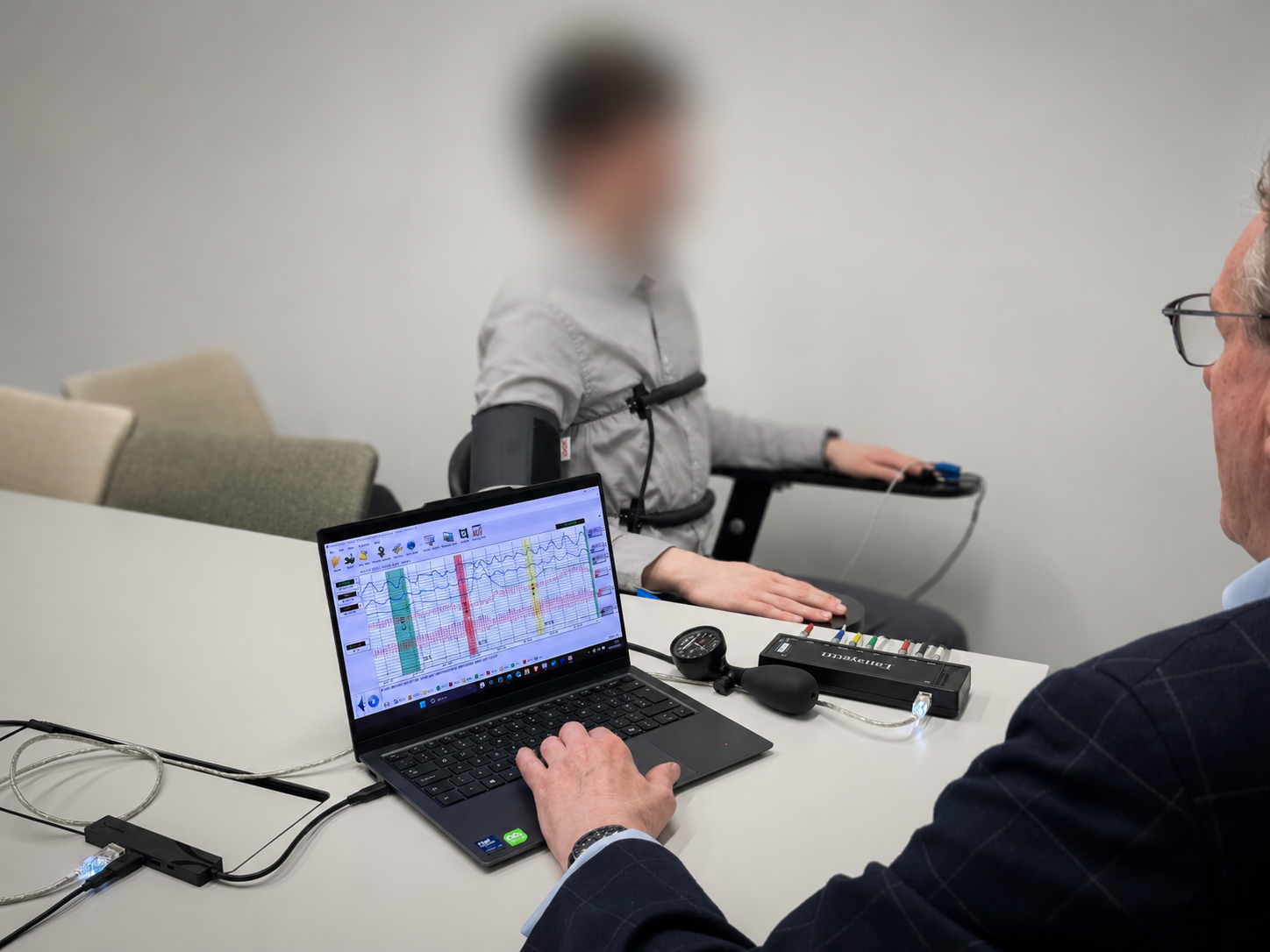
Dr Keith Ashcroft conducting a computerised polygraph examination in a private professional office

Centre for Forensic Neuroscience · Henley-on-Thames

Lie Detector Test Henley-on-Thames

Confidential polygraph examinations are available by prior appointment in a private professional office in Henley-on-Thames.

Every examination is personally conducted by Dr Keith Ashcroft, Investigative Psychologist and Principal Forensic Polygraph Examiner.

Appointment only · Suitability reviewed before acceptance · No walk-in service

  • Personally Conducted
  • Suitability Reviewed
  • Private Office
  • Confidential Process

Confidential Appointment Request

Request an Appointment

Requesting an appointment does not commit you to proceeding with a polygraph examination. Every enquiry is personally reviewed by Dr Keith Ashcroft to determine whether the matter is suitable and whether the proposed issues can be examined fairly, accurately and ethically.

You can request a confidential lie detector test in Henley-on-Thames online without first telephoning. An examination is not confirmed until suitability, consent, question formulation and practical arrangements have been reviewed.

Appointment Reservation

Appointments are secured with a £125 reservation retainer after the enquiry has been reviewed and accepted. Payment instructions are provided with the appointment confirmation. The reservation retainer is deducted from the final examination fee.

Preferred contact method

We will normally respond by email.

Please provide only the information needed for an initial suitability review. Do not include highly sensitive personal data unless necessary. Maximum 500 characters.

Submission of this form is an appointment request only. An examination will not proceed without the examinee's informed and voluntary consent.

Required fields are marked with an asterisk.

A Thames Valley Appointment Option

Confidential polygraph appointments in Henley-on-Thames

Henley provides a discreet Thames Valley option for people who prefer not to travel into central London or Oxford. The examination takes place in a neutral professional office, away from the examinee's home or workplace, with the practical arrangements managed directly by the Centre for Forensic Neuroscience.

Each enquiry is reviewed individually. The proposed issue must be suitable for a polygraph examination, capable of being framed around defined factual conduct, and supported by informed and voluntary participation. Submitting an enquiry does not confirm an appointment, and CFN may decline a case following its suitability, ethics or safeguarding review.

Appointment Only

The Henley examination venue

Confidential polygraph examinations can be arranged by prior appointment in a private professional office at The Henley Building on Newtown Road, Henley-on-Thames.

Appointment address

Regus – The Henley Building
Newtown Road
Henley-on-Thames
Oxfordshire
RG9 1HG
Venue details and directions

How the venue arrangement works

CFN books a private professional office only when a confirmed examination requires it. The location is not a permanently staffed CFN branch, office or registered address, and there is no walk-in polygraph service.

Clients must not attend without a confirmed appointment. Practical arrival instructions are provided after the appointment is reserved. Regus reception cannot provide clinical, case or polygraph advice; all case communications must remain directly with CFN.

The examination is conducted by the Centre for Forensic Neuroscience, not by Regus. Regus does not recommend, refer, supervise or endorse the service and takes no responsibility for its conclusions.

The venue advertises on-site parking and wheelchair accessibility. Clients with specific access requirements should inform CFN before booking so that the arrangements can be confirmed for the particular appointment.

Who may benefit from the Henley location?

The Henley setting is intended for clients who need a privately managed appointment and a neutral location within the wider Thames Valley.

Therapeutic and recovery work

People already working with a therapist may enquire about therapeutic disclosure, maintenance or monitoring work, including within a compulsive sexual behaviour recovery programme. The polygraph is an independent assessment procedure, not treatment.

Private and relationship matters

Couples and private individuals may seek a structured examination of a clearly defined factual dispute where consent is voluntary and the purpose is constructive rather than punitive.

Professional instructions

Solicitors, safeguarding professionals and other representatives may instruct an independent examination of a defined account or allegation, with reporting and liaison agreed in advance.

Workplace and discreet appointments

Business owners, employers and professionals dealing with theft, fraud or disputed misconduct may prefer a neutral office away from their organisation, home or usual workplace.

A therapist may provide relevant background information or attend an appropriate part of the process when authorised and professionally useful. The examination remains independently conducted by CFN, and therapist involvement does not alter the numerical scoring or conclusion.

Structured Therapeutic Purpose

Therapeutic and disclosure polygraph examinations

Therapeutic polygraph work may be used as one component of a wider treatment or recovery process. It should have a clearly defined therapeutic purpose and be coordinated thoughtfully with the work already being undertaken by the client, partner and therapist.

CFN distinguishes the purpose of the instruction before questions are developed:

Disclosure verification

Examines whether defined conduct has been omitted from a prepared therapeutic disclosure, within an agreed scope and period.

Specific-issue examination

Addresses a particular disputed event or behaviour rather than attempting to verify a person's entire history or character.

Maintenance examination

Reviews defined conduct during a specified maintenance period after a disclosure or within a structured recovery plan.

Monitoring or recovery-related examination

Considers compliance with clearly stated recovery boundaries during an agreed period, where the purpose is proportionate and appropriate.

What this assessment does not do

A therapeutic polygraph does not diagnose compulsive sexual behaviour, replace therapy, determine whether a relationship should continue, or provide treatment for trauma or PTSD. It requires informed, voluntary participation and a scope that is capable of fair examination.

Where a partner has requested the examination, the examinee must still consent freely. Coercive, retaliatory or unsafe circumstances may make the instruction unsuitable.

Private and relationship matters

Relationship examinations are accepted selectively. The matter must concern defined factual conduct, not a demand for general reassurance. Depending on the case, a suitable scope might consider whether a person engaged in specified contact, used identified platforms during a defined period, omitted defined conduct from an agreed disclosure, or breached a clearly stated behavioural boundary.

The relevant questions are developed only after the circumstances and source information have been reviewed. Questions about feelings, intentions, attraction, future behaviour or whether somebody is being completely honest may not be suitable.

Read about relationship polygraph examinations

Legal, professional and workplace instructions

CFN accepts instructions from solicitors and other professional representatives to examine a defined account or statement. Instructions may also relate to theft, fraud, disputed workplace conduct, safeguarding concerns or another clearly bounded factual issue.

The intended use, disclosure arrangements and reporting format are agreed before the examination. Polygraph results should be considered alongside other available information; they do not determine guilt, innocence or legal fact, and this page makes no claim of automatic court admissibility.

Why choose the Centre for Forensic Neuroscience?

Every accepted examination follows a structured and transparent process, from initial case review through analysis and reporting.

Personally conducted

Dr Keith Ashcroft conducts every examination personally. There is no subcontracted or anonymous examiner.

Suitability and safeguards

Case suitability, purpose, voluntariness, ethics and safeguarding issues are reviewed before acceptance.

Agreed questions

A structured pre-test interview is completed and all relevant questions are discussed and agreed before data collection. There are no surprise relevant questions.

Evidence-led analysis

Advanced computerised physiological instrumentation is used, followed by evidence-led numerical analysis of the recorded data.

Clear feedback and reporting

Same-day verbal feedback is provided where appropriate, with written reporting when requested, required or agreed.

Relevant case experience

CFN has experience with therapeutic, private, workplace, safeguarding and professionally instructed examinations.

The examination process

The stages are explained before the appointment so that the examinee understands the purpose, scope and procedure.

  1. Step 1

    Initial enquiry and suitability review

    The circumstances, proposed issue and intended use of the examination are reviewed.

  2. Step 2

    Question development and pre-test interview

    The relevant questions are developed, explained and agreed before recording begins.

  3. Step 3

    Physiological data collection

    Responses are recorded using advanced computerised physiological instrumentation.

  4. Step 4

    Analysis and feedback

    The recorded data are numerically evaluated, followed by verbal feedback and written reporting where agreed.

A specific-issue examination will ordinarily address no more than three carefully formulated relevant questions. Multiple unrelated allegations may require separate examinations. Read more about polygraph question formulation.

Fees and appointment reservations

Fees are confirmed before an appointment is reserved. The quotation depends on the nature and complexity of the instruction; preparation, venue, professional liaison and reporting requirements may affect the amount.

There is no charge merely to submit an initial enquiry. An accepted appointment is normally reserved with a £125 reservation retainer, which is deducted from the final examination fee.

No fixed Henley examination price is published because materially different instructions should not be quoted as though they involve the same preparation and professional work.

Areas served from Henley-on-Thames

The Henley venue can serve clients from the town and nearby parts of Oxfordshire, Berkshire and Buckinghamshire. It may be particularly convenient for people travelling from Marlow, Twyford, Wargrave, Sonning, Reading, Wallingford, Nettlebed, High Wycombe and Maidenhead.

Clients who need a different appointment area can review the established pages for Oxford, Reading, London, the South East or the wider UK service.

Lie Detector Test Henley-on-Thames: Frequently Asked Questions

Clear answers about the venue, suitability, therapeutic work, fees and appointment arrangements.

Page content last reviewed: August 2026

Request a Confidential Henley Appointment

Every examination is personally conducted by Dr Keith Ashcroft. Submit a brief enquiry for an individual suitability review before any appointment is confirmed.

Related Appointment Locations